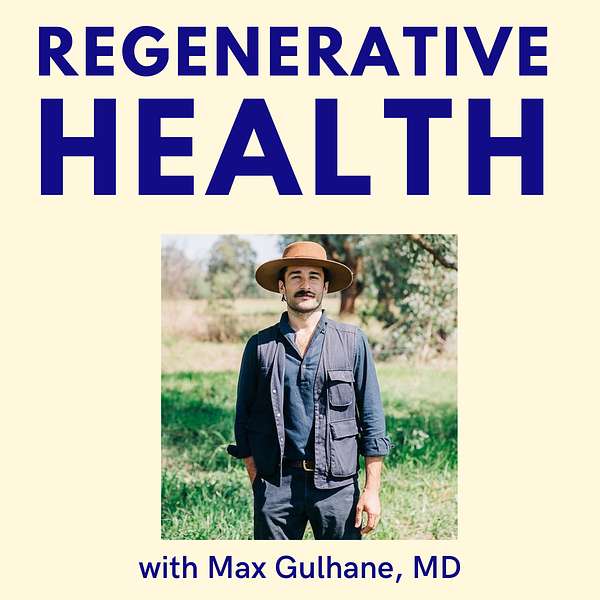
Regenerative Health with Max Gulhane, MD
I speak with world leaders on circadian & quantum biology, metabolic medicine & regenerative farming in search of the most effective ways of optimising health and reversing chronic disease.
Regenerative Health with Max Gulhane, MD
97. Why Circadian Health is the Bedrock of Mental Health | Prof. Sean Cain
Sunlight or fake light? We explore how light timing and intensity shape the circadian clock, mood, hormones, fertility, and sleep—and why amplitude is the missing key. Sean Kane shares new research on individual light sensitivity, depression and bipolar patterns, and practical fixes that work.
Sean Cain, PhD is a Matthew Flinders professor of circadian biology at Flinders University, Australia. He has more than 25 year of research into human circadian system and how light affects health.
Join Dr Cain's Adelaide Research project: http://theilluminatestudy.com/
(see below for more study links).
PODCAST SPONSORS
🧡 HARDBLOCK Australia's Longest Running Bitcoin-only (₿) Exchange
Use code REGENPOD for AUD 10 of bitcoin post verification https://www.hardblock.com.au/join/REGENPOD
SUPPORT MY WORK
CONSULT Lifestyle consulting with circadian / mitochondrial & metabolic perspective - https://www.drmaxgulhane.com/offers/5jfDvLyH/checkout
🚨 DAYLIGHT COMPUTER. Blue-light free computer that doesn't wreck your circadian rhythm. Now shipping around the world. Code DRMAX for $25 off. https://buy.daylightcomputer.com/DRMAX
🥩 WOLKI FARM - Regenerative beef shipped around AUS. Highest quality fully grassfed & pastured pork, beef, lamb & eggs raised with holistic principles. Code DRMAX for 10% off. https://wolkifarm.com.au/DRMAX
🚨 VIVA RAYS. Premium blue light blocking glasses with the most useful 3 in 1 clip on frame sets. Code DRMAX for 15% off. https://vivarays.com/dr-maxgulhane
🚨 GEMBA RED. Highest quality photobiomodulation / redlight therapy devices, shipping within the USA. Code DRMAX for 10% off. https://gembared.com
🚨 CHROMA. Advanced photobiomodulation devices including D-light (Vitamin D-generating) & Lux vital with OPN3-5 stimulation, cold pillow for the ultimate night's sleep. Use code DRMAX for 11% off. https://getchroma.co/?ref=i6p39fn0
🚨 MIDWEST RED LIGHT THERAPY. Blue blockers, photobiomodulation devices, shipping to USA. Code DRMAX for 10% offhttps://midwestredlighttherapy.com/affiliate/DRMAX
🚨 BON CHARGE. Blue blockers, EMF laptop pads, circadian friendly lighting, and more. Code DRMAX for 15% off. https://boncharge.com/?rfsn=7170569.687e6d
🎤 PRIVATE MEMBERS GROUP on Skool platform - weekly Q&A, my 52-page eBook, PDF resource downloads & more. USD20/month, cancel anytime. https://www.skool.com/dr-maxs-circadian-reset
TIMESTAMPS
2:00 How The Circadian Clock Works
6:30 Ancestral Light Versus Modern Lighting
12:30 Amplitude: The Clock’s Strength Signal
18:00 The Retina’s Hidden Light Sensor
24:30 Melatonin, Blue Light, And Sleep Timing
31:30 Individual Sensitivity To Light
38:30 Light And Mood: Depression And Bipolar
46:00 Risk Taking, Habenula, And Blue Light
53:30 Cortisol, Melatonin, And Rhythms
1:00:00 Skin Light Myths And Real Pathways
1:07:00 Moonlight, Menstrual Cycles, And Fertility
1:15:00 Early Puberty, Seasonality, And Hormones
1:22:00 Longevity, Regularity, And Stable Days
Follow SEAN CAIN
Join Dr Cain's Adelaide Research project: http://theilluminatestudy.com/
Circadian Health Innovations (mi-eye): https://circadianhealthinnovations.com/mieye
X: https://x.
🧡 HARDBLOCK Australia's Longest Running Bitcoin-only (₿) Exchange
Use code REGENPOD for AUD 10 of bitcoin post verification - https://www.hardblock.com.au/join/REGENPOD
Full Ts & Cs https://support.hardblock.com.au/article/82-affiliate-code-terms-and-conditions
Back on the Regenerative Health Podcast, I'm speaking with Professor Sean Kane. Now, Sean is a Matthew Flinders professor at Flinders University, and his research interest and speciality is circadian biology. And Sean has been the principal investigator and co-investigator on a bunch of very interesting and large trials showing the reality and real effects of our light choices on a whole bunch of different diseases, particularly mental health. So, Sean, thanks for joining me today.
Prof. Sean Cain:Thanks for having me.
Dr Max Gulhane:And start with your explanation of the circadian system and how manipulation of it with say our light choices is affecting disease at a high level.
Prof. Sean Cain:Yeah, I the circadian system is really fascinating and powerful. You know, we've got this little set of cells at the base of our brain with suprachiasmatic nucleus. And it's called that because it sits above the optic chiasm, which forms an X. An X in Greek is chi, supra, sitting above, so it's the suprachiasmatic nucleus. It's about 50,000 cells per side in humans. And it's incredibly powerful. So it receives information about the outside world from the eyes. So light goes directly in. It sets it. And then this sort of acts to orchestrate rhythms throughout the brain and body. And it's it's got far-reaching effects, both direct and indirect, uh, ultimately influencing trillions of cells in your body. And that system evolved, getting very, very bright light in the day and darkness at night. That sets the clock. So if if you're getting that kind of input, the clock is robust, it's powerful, it's able to send the proper signals of when to do what to uh to the brain and body. Uh but it's it's just an exceptional little piece of tissue that has very far-reaching effects.
Dr Max Gulhane:Yeah, and well obviously we, your most recent paper that you were co-author on uh looked at the effect of light at night and uh cardiovascular disease incidents, which is a massive topic. But maybe maybe talk about how humans have are playing with this circadian system relative to what the ancestral or evolutionary uh inputs were to our circadian uh system.
Prof. Sean Cain:Yeah, we we are living these really strange lives now where we're out of touch with the natural light-dark cycle. So people are indoors about 90% of the day. And that has the effect of having you not exposed to the bright light that your clock is expecting in the day, but also having too much exposure to light at night, but also more irregularity in that timing. So if you if you think back to the ancestral light, incredibly bright all day long until dusk, and then there's a rapid drop-off, uh, and then then you're you're in darkness. What that does to the clock, so the clock it can keep its own 24-hour time, but it needs to be synchronized to the world through through the light in the eyes. Now, in ancestral times, it's it's very, very clear and very, very regular, um, you know, determined by the the movement of the heavenly bodies. But now we have built into this, you know, darkness in the day, brightness at night, and irregularity because we just hit a switch and we don't always hit those switches at exactly the same time. So it's really set up to confuse the system. So we we hear a lot about light at different times of day shifting your clock. Like light in the evening delays your clock, light in the morning advances your clock. But there's more to the effect of light on your clock than shifting time. And you can think of it as like moving the hands of a of a physical clock. That's what light does. And the direction depends on the time of day. But light has this other really powerful effect, which is to either enhance or suppress the amplitude of that rhythm. You can think of the amplitude of that rhythm uh in the superchiasmatic nucleus as the strength of its signal. If it's high amplitude, it can organize the rest of the brain and body well. If it's low amplitude, then it cannot. And it's interesting because uh you could think of it like the clock sort of defers to whatever input it's getting. So it's got an idea of what time of day it is. But when it's getting information from the outside world that no, it's not that time of day, then it it will change. And if it's very irregular and you're not getting those bright signals in the day and you're getting too much at night, it's essentially unsure of what time of day it is. And so its amplitude, which is sort of a reflection of how sure it is about the time of day, is lessened. And so it's it's just it's not uh it's not a confident clock, and it cannot uh therefore get others to follow it.
Dr Max Gulhane:Yeah, and and I think about this in one way, and you mentioned the ancestral light environment is the contrast, and the contrast between daytime light, which we are supposed to be receiving, is something in the order of you know 100,000 at a peak break in the order of 100, maybe 200,000 lux peak daytime, and then nocturnal light and below one lux on on dark nights with with just moonlight, and maybe you know one to five on a really bright moonlight. But that that contrast is is all how many orders of magnitude? It's it's enormous. And it it one, it speaks to the ability of the human retina to accommodate to massive fluxes of light and intensity, uh light difference, but it also speaks to what the body is expecting as normal. And my my lens is very evolutionary, and and thinking about what people would have had historically been exposed to, and you know, transposing that on the paradigm that we both know is happening today with as you as you mentioned, light at night and and indoor time, that amplitude or that contrast is going to be is nowhere near what it was historically.
Prof. Sean Cain:No, nowhere near. We're um I published a paper in Scientific Reports in 2020 that uh you can put in the show notes if you want. But uh we used a very early prototype of our wearable light sensor. So we we created it because there's really no good um wearable that allowed you to see what people are really exposed to in the real world. Um there there are there are some, but uh they're of a varying usefulness. So we couldn't tell like what um wavelengths of light from from existing wearables too well. So we did that, and uh we we looked especially at the light before bed. And if you look at you know sunset, you go from very, very bright to dark in you know you know 20, 30 minutes pretty much, like near near very bright to very dark. But when we looked at what people were exposing themselves to, they were essentially living in this perpetual twilight all the way to bed, uh, which you know, light that might seem visually dim to us um at night can can be really significant depending on the wavelength for the circadian system. Uh and on, you know, on the other side, you know, you've got uh exposure to indoor light that you know might appear bright to you and you might might have some windows, but it could be a few hundred lux, not a hundred thousand lux, which is what the body's expecting. And and you're right about the the adjustment to light, but we visually adjust in a way that our our circadian systems don't. So the circadian system, the those intrinsically photosensitive retinal ganglion cells that contain melanopsin, which like the circadian photopigment, um you know, it's it's like a photon counter, and it's you know, it it it uh you know gets more and more more light uh and and it can tell how bright it is. Whereas the visual system adjusts. If you go from 100,000 lux and you go indoors, the visual experience is not so many orders of magnitude different. Uh it's uh your visual system adjusts. So it's sort of a it's a bit of a trick, uh essentially. We we are aware of our conscious awareness, not this non-conscious brightness detection system. And so we might feel, oh, this is this is bright, this is daylight, but it's really not to our circadian systems. It's it's very dim during the day because it's expecting more brightness.
Dr Max Gulhane:Yeah, it's a it's a good opportunity to quickly outline the difference of these retinal cells. And the way I like to explain it and feel free to add some color is that the the intrinsically photosensitive retinal ganglion cells, they're they're almost they're they're clock function, they're not image forming. So, and they only make up possibly less than 3% of the retinal cells. So the the bulk of of the hard work or the um image forming capacity of the retina to tell us that there's a tiger in front of us or um you know that there's there's an oyster on the rock in front of us, is done by by our visual photo um receptors, our the cones and and the rods. But the the IP uh RCGs, the intrinsically photosensitive retinal gang cells, that they're more just firing on and off, depending on the presence and absence of of blue wavelength light.
Prof. Sean Cain:Is that how you say they're they're very unusual in that, or they're they're very different from visual photoreceptors in that when when they're turned on, they tend to stay on. They're not used to track visual things. So you need lots of refresh to be able to have a visual experience uh and see moving things and and whatnot, otherwise it would all be a blur. Um but for the IPRGCs, um, they once they're turned on, they tend to stay on. And this is this is something I think a lot of people don't appreciate. So for example, at night, if you if you're looking at your phone and it's it's really bright, you might turn it off and consciously you're in darkness. But those IPRGCs are still firing. They're still sending a signal to your brain that you're in light, and it can last for a long time. So I I did this little uh experiment in myself. I I was looking at my my iPhone, I had it, I had it bright and close, and uh I measured the my pupil constriction. And it's it's interesting, the IPRGCs they can they control um the pupil constriction. And when they are activated, um the you'll tend to still get pupil constriction when when the light goes away. And it indicates that you're still getting a signal into the brain that you're looking at light. Well, I I had that prolonged response for you know 10, 20 minutes. So and that's when I stopped recording. Who knows how long it went on? But we have this study um back in 2018. We looked at individuals with delayed sleepwake phase disorder. So these are people who can't sleep at a time of day they want to. Uh, and we looked at people who had very, very delayed rhythms, and we found that they their circadian systems were hypersensitive to light, which is kind of not surprising. You know, if light at night, which is easy to expose yourself to, uh, it delays the clock. So it will be harder to get to sleep. But we also looked at pupil constriction in these people to only about 150 lux of light, so it's kind of indoor light levels. It did shift the clock more, but also these people showed a prolonged pupil response after the light went out for hours. So this it's not just the light you're exposed to that in in that moment, but that light can have an effect even after you turn it out. Turning out the lights isn't even enough. You really need to avoid it in the first place.
Dr Max Gulhane:Absolutely. And and a couple points on that. Well, maybe we'll add some detail with respect to exactly what's happening when these intrinsically photosensitive retinal ganglion cells are triggering. And and obviously it's it's their their band or their uh activation, wavelength activation range is peaks at around 480 nanometers in the essentially cyan, but extends out into the green light. Um and then when they when they're triggered, they're they're sending a signal, as you mentioned, to the to the hypothalamus, the suprachismatic nucleus, which is going all the way through the superior cervical ganglion to the pineal gland. I think the key or canonical pathway that we're talking about here is if you're showing yourself this light, then you're turning off melatonin production. And melatonin, as in one of its many roles, is facilitation of sleep and rest. So the the exposure to bright light is, I like to explain to patients, it's like showing yourself an alien sun and the body's making an appropriate physiological response, which is alertness, wakefulness, cortisol secretion, but it's just obviously mistimed relative to to the ancestral need of that time of day.
Prof. Sean Cain:Yeah, absolutely. You know, it's if if you are exposed to light at night, you're essentially telling your clock, your clock may think it's it's nighttime, it's trying to get melatonin released, and you you shine light. That'll suppress the melatonin. It is appropriate, as you say, because essentially you're telling the clock, you think it's night, but you're wrong. It's daytime. The evidence for that is there's light. Light occurs in the day, so change your time. So it essentially changes its time to earlier in the day, making it harder to get to sleep. It essentially adds time into your day so that it can fix what it assumes is a wrong time. So the that light is information. And the SCN takes in that information. Unfortunately, the SCN always assumes it's wrong. And so it always does what you tell it to do with light.
Dr Max Gulhane:Yeah, and and you know, the implications of that delayed onset of melatonin, I think, can't be overstated. And and although your area of research hasn't surrounded about um cancer, there's there's abundant evidence that light at night is is uh strongly associated with breast cancer, and so much so that that effective blindness in women essentially almost completely uh reduces risk of breast cancer. It's a very strong effect. And the mechanism is is the the role the melatonin is um reducing oxidative stress and and potentially helping clear up or prevent uh malignant cells from performing. But in in practice, what people are doing is that they're not only stopping their body from getting nice restful sleep or or the onset of sleep, but they're also sabotaging that autophagy, that um repair phase that only occurs when we're getting good quality sleep.
Prof. Sean Cain:Yeah. Yeah, true. That's it it's a fascinating study. It's uh Erin Evans, who's a a colleague of mine back at um Harvard Medical School, she did that. Uh it's amazing. So, yeah, it in totally visually blind women, they had lower rates of breast cancer, which is especially interesting when you consider that you know, when people are totally visually blind, they what most people don't realize, as as difficult as that is in life, you also tend to have a sleep disorder, um, which is a non-24-hour sleep disorder. So you're trying to live a 24-hour life fitting in with everyone else, but your underlying clock is running uh in the case of blind people, it gets up to you know around 25 hours. So it's running in the background. It's kind of like perpetual shift work in that you're you're trying to sleep oftentimes way out of phase with your body, despite that uh lower rate. So peep people think of sleep disruption as as being something that uh makes you more vulnerable uh to cancer. But you know, even with a with a um you know pretty tremendous sleep disorder, uh, when you take light out of the picture and its effect on melatonin, you get lower rates.
Dr Max Gulhane:Fascinating. Uh I want to make a point also about the sensitivity in the individual sensitivity to to blue light. I think this is a really key point. And I've I've seen papers as well showing the the wide variability in sensitivity to light. So what what they do is they measure a salivary uh melatonin level as a means to understand how sensitive that person is. And and the lower the the the melatonin potentially, or the the more sensitive that person has been because their system has turned off its production and and obviously using different lux or brightness uh intensities. And there there was a huge variation, and some people getting profound suppression at very, very maybe 10 or 5 lux, and others not having any effect up until you know 150, even. Um, not to say that they might be affected in another way that we just aren't quantifying. But I guess the the point speaks to your uh that cohort with a sleep weight disorder is that we don't know on an individual basis who is to what degree sensitive. So um my recommendation to everyone is is let's we just need to minimize our exposure to this this light at night, particularly or especially in the blue wavelength.
Prof. Sean Cain:Yeah, actually that that was a paper of mine. It was a PMAS uh 2019. Um yeah, we we it was a it was such a an incredibly uh difficult study to run. So each each person had five to six um trips to the lab where we we kept them in and we we did uh melatonin suppression to light. Uh it was yeah, very intense. It ended up being about 55 people, which is a lot to run multi week studies. So and we did we did dose response curves to light within individuals and looked at the point where melatonin suppresses about 50% of your your um or light suppresses 50% of your melatonin. And yeah, there was 50 to 60. 60-fold differences. So we had people who and in general as a group, they were pretty sensitive. And then some people were insensitive. But the more the more sensitive people, they they could get 50% suppression of their melatonin with 10 lux. Whereas the the least sensitive person we saw, it was 400 lux. That's the level of and these were healthy people highly screened, not groups that might have had reasons to have even greater sensitivity or insensitivity. Like the people with delayed sleepwake phase disorder who were very, very sensitive. We didn't have those those folks in the study. So it could even go below six as a six luxe as something that would suppress half your melatonin. So yeah, I was a real eye-opener. You can't tell by how visually sensitive you are, how sensitive this unconscious system is to light. So it I think a lot of people assume, well, if I if I find this bright light aversive, I'm I'm vi I'm sensitive to light. Well, that might be the case visually. It might not be the case for the circadian system. You just don't know. And that's why we do measures like melatonin suppression. We also do um post-illumination uh pupillary response. So that's that prolonged response of the pupil to light after exposure to blue light in the dark. And we've done studies in that um, in one showing that you know people with um in these healthy people with personality traits related to bipolar disorder. Uh in this case it was it was mania, uh, they were far more sensitive to light, showed a far stronger post-illumination pupil response. Um we're we're using that measure as well as as melatonin. So like you said, there you don't know just because you see something with melatonin suppression doesn't mean you're gonna see it in other things. So we look at multiple levels and and uh and and uh figure out what the what the sensitivity is in other ways.
Dr Max Gulhane:I'm glad you brought up mental health because that was exactly what I was gonna suggest, which is someone might say, oh, we we we just have depression in our family, or we have bipolar in our family, but it may be that that that inherited trait is actually severe or exacerbated sensitivity to blue to blue light and light at night. And the the phenotype that they're manifesting, which is depression, anxiety, mental health, is simply is the response to a really uh uh sensitive uh circadian system.
Prof. Sean Cain:Absolutely. And uh, and it goes with both um major depressive disorder and bipolar disorder. They're sort of opposite when it comes to light sensitivity. So we did a study a while ago, I think it was 2018. Um we had people who were currently experiencing depression, uh, people who were not currently experiencing depression but had in the past, so they were remitted, and then controls who hadn't uh experienced depression. What we found is that the group currently in a state of depression were really insensitive to light. Now that was with melatonin suppression again. Essentially, we you know we gave them light that would suppress more than half of melatonin. They they barely suppressed it all. It was like almost like there was no light at all, which is kind of interesting in in other ways. So we know there's circadian disruption in depression, um, but also we know that light acutely enhances mood. So if you go out on a bright sunny day, you you get in a good mood. Uh it's a it's a response to the to the bright light. Well, in someone with with depression whose you know light sensitivity is is way down, they might never really experience those mood-elevating benefits of light. Uh so we also looked at, well, what what do selective serotonin reuptake inhibitors do? So very classic antidepressant. Uh and we found uh in a study, it was a four-week study where people got um both placebo and uh cetalipram, um antidepressant, and found that in every individual they suppressed more melatonin to light with the cetalipram than with the placebo, every individual in that study. And so I think what a lot of the antidepressants probably do is enhance uh light sensitivity. And so that's you know, seeing the world as sort of darkness, uh, essentially, because the the brightness detection system isn't functioning, can be overcome with this uh medication that increases light sensitivity and can give you more of that mood elevating effect. But move increasing uh sensitivity to light is not universally good. So it's good in the day, but you can imagine it's bad at night because light at night suppresses the clock, it shifts it around, uh, it essentially gives you like a like a perpetual jet lag. If that's enhanced, that's bad news. So we're we're doing studies now, basically trying to get at is it around, is it the behavior toward light that determines the efficacy of those uh antidepressant medications? So can we, with existing medications, uh have them work for way more people? Because they work for a little over half half the people that use it. We think that that's probably because of light behaviors. And in fact, we we tested that idea, and we have a paper that's um we just wrote it, we're we're going to publish it. It was an intervention study where we had people who were on antidepressants but were still experiencing depression. So they had severe depression. We advised them to get more bright light, uh, we gave them smart lights in their homes, uh, asked them not to use other devices as much as possible, and we monitored it with uh a wearable light sensor. And we found that they they did comply. And what it's what is amazing is that the the people who were in the light intervention group went from severe depression to mild depression in only a few weeks.
Dr Max Gulhane:Incredible.
Prof. Sean Cain:Yeah, and half of the controls actually agreed to do the intervention afterwards, identical results. They went from severe to mild in in just weeks. Now you also mentioned bipolar and how there would be, you know, maybe something to do with uh light sensitivity there. And there certainly is, and what's amazing, just like in in depression, where you have low light sensitivity and the medications used to um treat it, increased sensitivity, it's the opposite in bipolar disorder. For a long time, people have suspected that there's a light sensitivity issue going on in bipolar disorder. Uh and some of that research goes back to the early 80s. Um and you know, we've we followed that up with our um blue light PIPR study. Um but the medications used to treat bipolar disorder, what do they do? They decrease light sensitivity. And so it's it's probably the case that you know you've got either too little or too much light input can can be disruptive, and you essentially normalize it with these medications, and that's a good starting point for being healthier, provided you have good light behaviors.
Dr Max Gulhane:Yeah, it reminds me of a prescription that I think you know every doctor should be making, which would be you need to get your morning light and you need to spend the day outside in bright sunlight. Um, and here is your uh SSRI or here is your um whatever your lithium or whatever you're else you're being treated with. Um and then ideally we'd be would be removing that if they they can sustain those those changes. Do you do you think that the sensitivity that the patient's exhibiting is that temporary or as a result of their condition? And do you think it does it normalize once the patient's recovered, or is that in essentially an inherent characteristic?
Prof. Sean Cain:I think it's both. In the case of depression, you know, we have evidence that suggests, but you know, I I I think more work needs to be done, that it is somewhat state dependent, that it can change. Um and maybe that is the case that you can lower your light sensitivity. I I think though, in the case of really elevated light sensitivity, that it's probably something stable. Um but you know, I I I couldn't say for sure. Um, but yeah, it's I think there's probably elements where some people are just they tend to be lower, tend to be higher, uh, and there might be some room to change that.
Speaker 2:Cool.
Prof. Sean Cain:You know, ultimately, probably in our our natural history, it did not matter because you were exposed to supersaturating light or darkness, and all of these individual differences in in light sensitivity washed out. You know, there's a this really great study um back in uh 2013 by by Ken Wright. It was in Current Biology, where they they took people, they were, I believe they're university students, uh, they tracked their light behavior, um, sleep wake cycles in everyday life, and then brought them out camping. And what you see is that people had all sorts of variation in their circadian time out in the real world. Uh, but when you brought them camping, they essentially all had identical circadian time, identical uh sleep-wake cycles. So, you know, I think you we have this idea that there are morning types, evening types. You know, I I think in general that's that is uh just a product of these artificial modern environments we live in where uh yes, there's huge individual differences in light sensitivity, but that's in the indoor light range, which out in the natural world is borderline meaningless. So yeah, I think um yeah, I think ultimately, yeah, that those those differences may not have mattered, and now they do.
Dr Max Gulhane:Great point because uh people protest or use the reasons of of oh, this is I have a uh a night owl chronotype or et cetera. And it's almost used an excuse to to continue to binge on and indulge in you know late night doom scrolling. But that study and that and your explanation really hits at what I like to think in my position, which is yeah, if you are in your uh environment that you're supposed to be in, that evolutionary biology has dictated for you and designed your system, then again, as you said, it kind of washes out. Do do you have any thoughts about the potential why that there is is these variations from an evolutionary point of view in sensitivity? Um, as a I guess a related question?
Prof. Sean Cain:Yeah, well, there's you the the effects of light that aren't just on the clock. Um there is like IPRGC input, like uh circadian light, you could say input to different areas of the brain. So for sure, you you know the the the biggest input's to the clock. Clock needs to know uh what's going on likewise. But you have input to you know areas like the amygdala or the uh habenular region, uh, and they really affect your uh cognition as well. So we we have um we had a paper a few years ago looking at just regular room light and uh its impact on in uh an fMRI study on amygdala activity. And the light essentially shut down the amygdala. Not only that, but it uh enhanced the connectivity between the prefrontal cortex and the amygdala. And so there's probably better control of emotionality, so less negative emotionality and more cognitive control of your emotionality. So and I think that's why you know people just kind of assume we should light up the night because they they feel safe. They have less fear because you know they're they're in light. Um but I don't think it's the case that people are really more safe. They it just kind of hijacks the system and makes them less able to feel fear. Um but you know, also you know, there's light input to the habenula region, so you can kind of think of that almost as a pessimism region, um, to thinking that you know worse outcomes are are going to happen. And light in humans uh tends to reduce the activation, we think, of the habenula. And uh as evidence that you know light has these other cognitive functions, we we did a study recently, and that was in scientific reports last year, um, where we had the same brightness of light, but we altered the amount of like blue wavelengths in it. So it's going to have a different effect on these IPRGCs. And we had people doing a gambling task. And what we found was that at the same visual brightness uh but had more blue, people actually had less sense of loss in a gambling task. So they tended to gamble more, which is something I think is probably going on, you know, when when people are out in stores shopping. I think a lot of people have figured out, probably casinos as well. They figured out let's let's ramp up the blue, make it more white light. Because, you know, these are decisions you make. You pick something up, you look at it, say, do I want to buy this? You're you're weighing a loss of your money to the gain of having the thing. If you have been manipulated to have less of a sense of loss because of the lighting, then you might you might get it. In in gambling, you know, you you will take more risks. And if you think of bipolar disorder, um, there's a lot of risk-taking behavior in, especially in in manic episodes, and an expectation that your behaviors are going to have positive outcomes for you. You know, you what I think is going on is in these individuals, especially in a in a manic uh or hypomanic state, you're you're getting a bit of a shutdown of the habenula from the IPRGC input because you're you're hypersensitive to light. So that shuts that down. So you're not going to have as as much of a sense of loss. You're going to take more risks, engage in more risky behavior. So, you know, back to your question, is there a usefulness in these individual differences? Maybe it didn't matter for circadian timing, but maybe it mattered for the type of behaviors people engaged in. You know, you don't want a society that's entirely built up of people who don't take risks. You need some risk takers, uh as well as people who are maybe less of a risk taker. So you want a balance of these people in your society. So maybe that's how it shows up. Um, there's another another study we had recently with the same kind of setup, so same visual brightness, but different amounts of blue, we found that if there was more blue, people could reject negative thoughts about themselves more easily, which is just amazing. Um so I think that's part of the reason why we probably have kind of bad behaviors around light, especially when we're not feeling well. Because if you're if you're having negative thoughts, ruminating, you you you look at your phone, you're going to be less able to have a negative thought about yourself, which then causes circadian disruption and long-term uh negative outcomes. But I think it's probably these other inputs of light that still show up with um uh individual differences in light sensitivity.
Dr Max Gulhane:That thanks for that. And thanks for making that distinction because I think it's a a really important mental model for a lot of people who uh thought a bit about circanium rhythms, but um not a lot, which is the idea that you're getting non-timing related neural information from the the intrinsically photosensitive retinal ganglion cells. So it's not just about yeah, telling the brain the time, but it's also influencing decision making and, as you say, risk. And look, the implications are are are oddly fascinating. And and as you say, a casino, I mean, they've they they've from from business and profit, uh, they've realized that if you turn off all the or black out all the windows, show people only artificial light, bleat blare out uh artificial blue light from uh the pokey screen and then provide 24 hour access to alcohol, then you can run a very profitable business. And uh I think there are a lot of poor people, both literally and metaphorically, who have no idea and no conscious awareness that their physiology is being so uh effectively hijacked or co-opted by their light environment.
Prof. Sean Cain:Yeah, no, it's it's you know it's not something we're that aware of. And I and I think when it comes to lights, I I don't think there is probably a plan or knowledge of this from the outset. You know, we we just found this gambling result last year. It wasn't wasn't something that was already known, but you know, it's it's almost like a natural selection. You know, they figure out what works and uh and they stick stick with it. But yeah, those environments, you know, you've got more or less kind of dark, and then yeah, the pokies, the slot machines are are like these beacons calling you to them. They're they're so blue enriched, uh, and it just it's almost like it captures people. And then if it's altering your ability to realistically judge loss, then you're just gonna keep going. You're going to have this um, you know, almost a rational expectation of gain because you've you know you've shut down your herbenula and uh and and you're just thinking only good things are gonna happen here.
Dr Max Gulhane:Yeah, it's it's it's very, very interesting. And and obviously we can extend that the I guess conjecture or the speculation about effects to device use and how um if you're constantly on a on a phone and late at night, what is what is that doing to to emotional regulation? Uh, I don't think it's it's it's the opposite of of regulating. I think it's it's it's highly deregulating. Um I I want to come a little bit back to some of the fundamentals of the circadian mechanism, and maybe we can revisit our mental health. And well, obviously, the this melatonin cortisol rhythm is the hormonal output of the light input. Um, with melatonin rising um as dark will after darkness kind of peaking uh in in the new morning and then falling off as cortisol starts to rise. Uh can you can you speak at all to that and uh as it relates to the contrast? And obviously, Dr. Andrew Huberman has been talking a lot recently about how the the contrast and the and the cortisol and melatonin rhythms are are key to I guess maintaining regulation of of mood and and other circadian downstream effect.
Prof. Sean Cain:Yeah, I'm look with um cortisol is a an interesting one, and and sometimes you can you can get some unexpected uh effects there. But yeah, there's there's pretty strong circadian control uh in that you you know it's it sort of predicts that the wake, so it's it's it's setting you up for action in in the morning uh and then kind of fall falls off. So yeah, there is this um anticipation of of the day and and getting you ready. Uh and and with with melatonin, you know, you've got the the rise in the evening. Uh it also uh tends to lower your your body temperature, which is which is uh good for sleep, um you know, peaking in the in the middle late night and then falling off. Um so yeah, they're they're pretty key signals. When it comes to to mood and and cortisol, um, you know, it's you you can you can get some interesting results. For example, in uh PTSD, I think just thinking about it, you think, oh, there must be high, high cortisol. But in general, it's it's actually the levels are are actually lower. Um and probably we think we have some new uh a new paper you might appreciate uh that we haven't submitted yet, but uh we we think that's due to um a low amplitude rhythm. Essentially, you don't have that signal for a peak, you don't have that signal that it's it's about to be day, have a lower peak, and uh and less cortisol over the day, therefore. But uh yeah, you know, court's an interesting one. It's a messy one to uh to measure, so I I try to avoid it.
Dr Max Gulhane:Uh uh another kind of maybe more uh nuanced question for you, it it seems like melanopsin uh is expressed not only in in the retina, but also in the skin of humans. And and interestingly, I I was reading about the nocturnal bottleneck hypothesis and how in non-mammals, they're like reptiles and other um potentially birds, that they actually have multiple areas of of photic sensitive areas, including something called the parietal eye and the pineal gland itself. But the qu my question for you is do you know or are you aware of any research that is showing how impactful it is to show shine light, blue light, on the skin and and what that effect that can have on on the on the circadian system? Because it's my understanding that that the the photic pathway is the one that's gonna potentially is gonna influence melatonin the most. So maybe it's the the skin exposure to blue light isn't gonna necessarily suppress melatonin, but is it possible that it can disrupt circadian function in in some other way?
Prof. Sean Cain:Probably not centrally. I mean there there was a a study back in the late 90s uh that they they had light shining behind the knee and claimed to have found that it could it could shift the central clock. Um a few years later, uh that it was essentially debunked. Um and it's uh so it couldn't it couldn't be replicated. And certainly you know it's um you know with blind individuals who can't can't synchronize, yeah. You would you would think if there was something uh meaningful as a signal from from the skin that you would get some synchronization and you don't you don't see that. So I I think when it comes to any effect um of light on the skin, I I don't think it's going to end up having an impact on the clock. But you're right, there are just other um animals that uh you know even when they have no eyes can get can synchronize. So there's these really cool old studies by uh Mike Maneker, I think it was um back in the 80s, where they they had birds, and if they if they if they didn't have eyes and they had shaved the feathers on their heads, but they they had light shining on on the skull, uh they could synchronize. So it's the idea that there were some other deep brain photoreceptors that could synchronize the clock. So you know, not all animals is at all light through the eyes. Um, you know, certainly in in other animals you can get you can get relevant light penetrating through tissue in the body. Um but for us, uh it's in in I think all other mammals, it's all about the eyes.
Dr Max Gulhane:Yeah. Yeah, no, that that that was uh interesting. If anyone's interested, is a paper by Gherkema that looked at this nocturnal bottleneck hypothesis and this the idea that uh we were after the when the dinosaurs were around, we were essentially fuzzy furry mammals uh confined to underground nocturnal lifestyle. Um and then we re-expanded after they got wiped out um in the in the KT event. Because if you if you look at the phylogeny or the list of potential photoreceptors, it's something like this long. And we're obviously only um featuring a fraction of of those photoreceptors, and probably because we didn't need them um from a from a nocturnal uh lifestyle. Kind of a JSON and to that is that there's a corneal photoreceptor neuropsin that is maximally sensitive, I believe, at 380 nanometers in the UVA. Do you do you know anything about that or or have you seen research that that is having a strong effect on the clock or central rhythms?
Prof. Sean Cain:Um no, no. Um I had seen something um you know recently by Samarhatar in Nature, um, and this was uh in in mice and animal models, where they were they were looking at shorter, shorter wavelength effects. And it essentially um what they found, and uh, you know, I did a very cursory look at this, so um, I might get it wrong, but they they found that in in a nocturnal rodent, you have a like a dead zone in the middle of the day for the phase effects of light. So light can you know shift in the night quite easily. Um, but in in nocturnal rodents, you tend to get like no effect, no phase effects, no time shifting effects of light in the day. Um, but they could see them with shorter wavelengths. So very, very new. I I think I just saw this like a day ago or two days ago. Um so um, yeah, there there might be something there.
Dr Max Gulhane:Yeah, but I think my my thought is, especially as it relates to the skin and cutaneous photoreception, I think that's most probably helping entrain the the secondary clock or the skin clock, which is obviously regulating skin cell keratinocyte turnover and and probably probably local effects rather than yeah, central if um central effects and maybe also in the cornea as well. Um, because obviously it's not only blue light, but but UV light, which is an ever-present reality on on Earth and on you know in ancestral past. Um what what what about moonlight? And people people commonly ask this question with respect to uh practical circadian living or circadian lifestyle. What what's your research or your knowledge about how fluctuations in natural moonlight affect um the system and potentially mental health?
Prof. Sean Cain:Yeah, for I I think in some circumstances, especially maybe if someone is very, very sensitive to light, I I think the you know, on a on a full moon, very bright moon, you could you can potentially have impacts, especially if you're if you're looking at it quite a bit. Uh you know, I I think it is it is possible, and certainly there's some evidence that um sleep changes with the lunar cycle. There was a very interesting paper um a couple months ago in Science Advances on uh menstrual cycle changes with with the moon. And you know, what makes sense about that uh as an effect is probably the the light. It's not it's not a gravitational difference or anything like that. Um and one of the one of the reasons you would think that is that the when they they had people tracked over many years. Um and as our world got brighter and we had more more phone lights and more LED lights in in the homes, those rhythms, those lunar rhythms in in menstrual cycles tended to go away. So it's it's probably something that that you see due to the light when we're not overly polluted with light and and don't have these um you know handheld devices, et cetera.
Dr Max Gulhane:Yeah, and and really, you know, subfertility or infertility, I I think is is probably at an all-time high. And polycystic ovary syndrome, endometriosis, these hormonally mediated uh diseases are just rampant. And and it really does make you wonder to what degree the fact that women are synchronizing to their iPhone screen instead of the moonlight is potentially impacting their reproductive function negatively.
Prof. Sean Cain:Well, you hit on yet another thing. You know, we've we've got uh we're we're always producing so many papers, um, but we actually looked in in the uh the same cohort that we uh we studied in in these papers that you covered. Um we looked at fertility and the age of onset of menopause in women um and looked at their light exposure patterns. So when women had more exposure to light at night, they tended to have fewer children and tended to have earlier menopause onset. And there's there's a long history of disruptive light impacting um uh fertility in in humans and and in uh uh non-human animals. So if you actually ablate the suprachiasmatic nucleus of a rat, their four-day ester cycle goes. So the the the clock is intimately involved in um in fertility and these these cycles. Not surprisingly, it controls a lot of a lot of hormones. Um but and shift workers have you know fertility issues um for sure. Uh so yeah, it's it's really fundamental. It's that, and especially the light at night is uh really powerful. So we'll be publishing that probably not not for many months, but uh it'll it'll come soon.
Dr Max Gulhane:Uh I mean I know z of zero fertility specialists or obstetrician gynecologists that are discussing light and and its effect on on their patients' fecundity or or fertility. But uh how important it is, I mean, that you've just given us a taste. And I think I think it's going to have to be brought to the forefront as as we grapple with this this massive problem. The I guess slightly related precocious puberty. I mean, w there's a lot said about the presence of endocrine disrupting chemicals from plastics, from whatever Teflon pans, phthalates, uh, you know, phytoestrogens, and the and onset of things like precocious puberty. But what what what what um do you know about the potential role of light in bringing on puberty prematurely in in women? Because the there is a can obviously a link to obesity and weight gain. So the the essentially leptin is is controlling the onset of of the menstrual cycle and reproductive cycle in in women based on having sufficient subcutaneous fat stores to sustain a gestation. So I mean, deducing it sounds like if if the if the if the girl is exposed to a lot of light at night, she's potentially becoming more overweight. Maybe that dependent or independently, she's probably could be bringing on puberty early through that persistent light exposure at night.
Prof. Sean Cain:Yeah, potentially. I mean, there's um you know the and melatonin is is potentially involved there as well. You know, there's there are a lot of animals that um are seasonal breeding, right? And you could force them into a breeding state with light. Um so for example, uh a male hamster, uh they'll they'll breed in the summer, uh, not in the winter. They've got like a 16-day gestation period for their for their young. So if if they are doing it, they're having kids soon thereafter. Um so if you extend the light um so that basically there's more light going into the night, it it's a signal that it's summertime. And so it suppresses the melatonin and it pushes that window of melatonin in, uh, giving it a signal that it's summertime. Uh this only happens in the summer when you have light encroaching into the night in both both ends. Uh, so now it's time to breed. And for it, if you look at males, there's this great old study where they they just gradually increase the number of hours of light in a 24-hour day. And if it was less than two and a half hours of light, it should be a kind of a short day, uh, their testes were like pea-sized, like almost nothing, couldn't see, couldn't see a thing. And then if once is you extend it beyond 12.5 hours of light in a 24-hour day, they ballooned. I mean, it looks like they're literally sitting on a beanbag chair. And this is this is just extending the amount of light in a 24-hour day had this massive impact on their uh their breeding behavior. Um now, humans aren't seasonal breeders like that, um, but you know, it's there there's a lot of mammalian physiology around um fertility, breeding, and and light. Uh so I'd I'd be surprised if there if there weren't effects.
Dr Max Gulhane:And getting to the wiring diagram, as far as I'm aware, the the the these functions, I mean the pituitary gland, the hypothalamus, these endocrine axes are the hypothalamic, pituitary ovarian axis, the hypothalamic, pituitary adrenal axis, the hypothalamic pituitary thyroid axis. So it we we just told or Sean just mentioned that the supraclasmatic nucleus sits in the hypothalamus and it obviously is projecting straight to the pituitary, the anterior posterior pituitary. So uh you don't have to make too many intellectual leaps to realize that the whole hormonal system is intimately tied to light exposures.
Prof. Sean Cain:Absolutely. And if you're if you're disrupting this control system, um yeah, there are going to be great downstream many downstream effects, not great.
Dr Max Gulhane:What what what do you think of this idea of potential, I guess, you we're potentially compressing or we're sh we we're compressing the lifespan by essentially using up people's allowance of blue light. And and what I mean by that is if we think about the number of hours of of blue light rich time that an organism is supposed to have without the invention of electric light, depending on well, it actually it evens out over no matter what latitude you are, it evens out over 365 days. Um it's gonna be 12 hours, it's gonna work out to 12 hours um a day for 365 days. Um if you're at really high latitude, you're gonna get most of that. You you're gonna get in the summer, you're gonna get most of it, and in the winter, you're gonna get a little of it. If you're at the equator, it's e it's even. But what what it seems like we're doing is that by using light at night, we are someone could be 40, but they could have shown their body 60, 70 years of equivalent blue light and and melatonin suppression. So I'm I'm guess I'm saying thinking out loud to say that it's not a surprise or it shouldn't be surprising that that person is going to age more because potentially they've tricked their body into thinking it's been longer on planet Earth than it actually has been.
Prof. Sean Cain:Yeah, potentially. I think the um I think the the bigger part I think you could, I suspect that you could have very long days every day um from birth to to death. Like let's say you you had a summer day length from birth to death, but I I think that uh if it was regular and it was very bright in the day, very dark at night, you would you would live longer. So I I I think it is all about the the signal to the clock to help it organize the rest of your physiology. Um yeah, so I I don't think there would be uh like a a max amount you could have, and if you go over that, um you know you've kind of used something up. Uh I think it's it's more around the the poor signals, the kind of the irrational days that we're we're exposing ourselves to with um uh you know light that's poorly timed, uh light that's irregular, um, and a confusion of a system that exists to organize everything.
Speaker 2:Yeah.
Dr Max Gulhane:Yeah. No, and and look, by by that it also implied the the the consequent impact on on night time and and night recovery. Because like I don't know, uh this is the way I I think about visually, maybe we should have talked about this earlier. But if you if you imagine a yin and yang with with a 24 hour on a interposed onto it with a clock face interposed, it it implies uh equal and opposite request.
Prof. Sean Cain:requirement which is you for optimal circadian function you you need not only full spectrum bright light but you need uh attendant dark nights you can't you can't have optimal circadian health without both of them yeah yeah and that that light needs to um you know it it needs to be relevant to to your body my um my PhD supervisor Martin Ralph did this great study back in uh 1998 who's in journal biological rhythms where he had he had he looked in hamsters and throughout their lives they they were exposed to 24 hour days but one they had different genotypes so they had one that was a wild type hamster so normal hamster and one that was was called a tau tau mutant so it's tau is basically it means your circadian period so another it's a it's a terminology used in circadian rhythms so it was a it was a clock mutant that had a 22 hour day and it was in a 20 24 hour day and the ones that were the 22 hour hamsters on a 24 hour day could just barely synchronize their clock and but they were really disrupted um very fragmented in their rhythms they died sooner so you know you you need to have light cycles through through your day that are kind of stable and kind of match up with your clock. Luckily we've generated clocks that match up with uh with the world um but if we're living on on weird schedules that our our bodies can't cope with it it's it's not good for your longevity.
Dr Max Gulhane:Yeah. Can we talk quickly about sunlight and sunrise? Because you mentioned dusk as as and and the progression to nightfall as is quite a precipitous change in the ambient light environment. Obviously the the equal well the opposite and equal is happening happening in in uh sunrise and and the work of of Glenn Jeffrey with with longer wavelength light and mitochondria seem to suggest that there's something unique about AM timing of of particularly that wavelength of light.
Prof. Sean Cain:But but what do you what do you what's your opinion about the the early morning sunrise relatively relative to say later in the day because obviously it's sunrise the total brightness intensity actually isn't quite yet at the the so-called 100 at the 10,000 locks that we're supposed to need for for potential um morning awakening it's a great question because I I I feel like you know there's been so much messaging around getting light in the morning and uh and there is a reason for that. So our our circadian clocks tend to run longer than 24 hours. So the average human internal day is about 24 point two hours. It's actually a little shorter in women than men, but in women and men on average it's it's a little bit longer than 24. What that means is that in order to synchronize your clock and your body to the 24.0 day you need to advance the clock a bit advancing the clock happens with early morning light. So that's that's why a lot of people are kind of stuck on that you want to synchronize your clock. But I think by focusing so much on the early morning light, it it I think it makes people think that light throughout the day doesn't matter so much. It's like oh crap I missed my morning light screw it it doesn't matter. But actually light throughout the day enhances the amplitude of the clock. It it essentially is a confirmatory signal that the things that should be happening are happening. It tells the clock you're right about what time of day it is, you know, keep going and it has a stronger signal to to the rest of the body. But you know I say that most people have on average we have a a clock that's greater than 24 hours but about 11% of men and about 35% of women actually have a clock that is shorter than 24 hours. So for those people actually morning light is not necessarily that beneficial in fact it can push their clock more out of time. So I think you know we we had a paper uh just uh a few months ago in journal biological rhythms modeling all of this and you know what we found is that really the thing that's universally good is light during the day. It's usually good to have light in the morning but that's not that's not universal. For people with short clocks actually you you don't want any more advancing because then it makes it more difficult to synchronize. But for everyone kind of light during the day especially you know in the middle of the day it's it's good. So I I think I think that message uh you know is it's a it's a bit too much. It's probably true most of the time, but it's not true all the time.
Dr Max Gulhane:And I think it detracts from people seeking light in the middle of the day to enhance and and I'll share uh you know I've I've got so many um instances of people saying that the the thing that really helped them fix insomnia was actually the fact that they that they set up their desk as instructed or in in an area where they were simply exposed to natural light throughout the whole day. So even even experiencing sunrise, yeah they did the sunrises still they didn't sleep that well um but when they were forced to spend the entire day not necessarily in direct sunlight irradiating them but simply with ambient light hitting their retina that was the thing that was able to ensure that they had a had a good sleep in which is exactly what you're saying Sean.
Prof. Sean Cain:Yeah and yeah we we did this um this study um it was published a few years ago scientific reports and we were looked at individuals we we had them in the lab for multiple days uh and we did these uh it was absurdly uh intense a study um we did something called a constant routine where people are in bed for 40 hours uh wake and they get hourly snacks they have uh hourly blood draws through a cannula we have core body temperature measured with a pill that swallowed it was a super intense thing so it allowed us to measure the circadian amplitude with their core body temperature and there's going to be some natural variation in that between individuals uh and what we found was that the the individuals who had um a high amplitude rhythm that tended to express itself in all in these blood metabolites so we looked at almost a thousand of them so they had more rhythmic metabolites they had those metabolites were closer together in time the people just had a more organized body and you know what was interesting in in that related to um potentially related to insomnia is that when you see a low amplitude temperature rhythm it's not that the whole thing is kind of squeezed in to the average actually what the the peak in uh core body temperature which which kind of occurs later in the day that's the same. It's the low body temperature it's the minimum that actually arises and that's what creates the low amplitude and the low the when your body temperature is at its lowest that's the time actually when your circadian clock has the strongest signal for sleep. It's not actually at the beginning of the night the beginning of the night like the first half of the night is really dominated by homeostatic sleep pressure. So just being awake makes you sleepy and that covers you getting to sleep in the early night. But in the last half of the night that's that's where the circadian clock kicks in with its strongest signal for sleep. Now if you have a low amplitude rhythm, uh which you would do if you don't get bright light in the day and you get too much light at night, there's going to be less of a signal from your clock to stay asleep. And I think that's a a reason for a lot of people's uh insomnia especially sleep maintenance insomnia sleep onset insomnia I think a lot of the time is probably like uh you know the the folks with uh delayed sleepwake phase disorder they're so sensitive to light for such a long time that it's difficult to get to sleep. So I think that's that's likely going on with with a lot of a lot of people but maintaining a sleep not being able to sleep through indicates to me that you know you might have a low amplitude rhythm. And so what you said exposing yourself to lots of bright light in the day that will enhance amplitude avoiding light at night that will avoid the suppression of amplitude and so people sleep better under those conditions.
Dr Max Gulhane:Yeah absolutely fascinating that is uh and it makes it absolutely makes so much sense and and obviously the difference between sleep onset and sleep maintenance in Solan yeah is sleep maintenance is people oh they they come into the clinic and they say oh I'm I'm I'm okay to go to sleep but I keep waking up and yeah there's other factors at play here and uh you know psychological state and so-called you know nervous system activation and is obviously you can if you feel unsafe either perceived or real then that's obviously a a factor but what Sean is saying is that if people are if your problem is that you're what you're getting to sleep but you're not staying asleep, then perhaps it's because you've been in this twilight zone of daytime artificial light, lack of of full spectrum bright hundred luck sunlight and your your circadian rhythm has suffered and that's why you're potentially um you're not staying asleep. And uh and in terms of the sleep initiation and that's what uh what we're talking about in terms of potentially adenosine signaling and um and essentially the the activity throughout the day creates the sleep pressure. And if you drink coffee and you block adenosine receptus then you're you're gonna have sleep initiation problems. So uh if you yeah to to to tie it all together you really want to uh avoid stimulants use natural light early you know in the morning as your wake up spend the whole day outside uh and then you get a really nice not only timing but also amplitude to fall asleep and stay asleep.
Prof. Sean Cain:Yeah and um you know we we had a study uh in 2021 uh using the UK biobank data but not the light sensor data it was just self-reported light uh and and we people were asked about their number of hours of of sunlight that that they got in the day and you know we there there was a real relationship with with insomnia symptoms so they had better mood more light in the day better mood less insomnia uh so getting bright light in the day is something I think a lot of people aren't trying and it is it is annoying I I I know it's difficult and annoying to get you know hours of sunlight it's it's not it it doesn't feel like it's very practical in in our modern lives but you know do what you can like everyone should at least eat lunch if you're working every day at least eat lunch outside you know try try where you can fit it in to get bright light. You know the the light throughout well if the sun is up then it's uh you know depending on the photo period you know if extreme photo periods it's not it's not true um but generally if if the sun is up it it will enhance your amplitude it's good for you so get it yeah and maybe maybe we we're actually going to need to record another episode to talk about uh diabetes um obesity shift work and cardiovascular health because I feel like we need to do that topic service so maybe we can if if you're available Sean we can record again but let to tell us about this device that you're that you've that you've made um I'm guessing you used it in your in your studies as well to kind of guide people about their their light habits and how to get their light needs met during the day. Yeah so this is uh I'm I'm wearing it now and and I'm I'm always wearing it um it's it's called the my eye so we're we're making it right now we're it's it's just uh for sale uh to researchers um so it's not it's not available to the general public so if if you're if you're you know listening to this watching it now um no you can't buy it I know I'm sorry we are working we're working hard to uh to bring it to a commercial like to consumer market everyone everyone can get it um but that's a matter of software like you you need some good real-time feedback um right now it it is a data collection device and the the analysis is done offline so it's it's not a a a smooth um you know commercial wearable yet so just just a warning if if you want one uh I my apologies but you'll have to probably wait a year uh but we we created it because we realized we are clueless about what light exposure you know people are getting in the real world. Yes there's there's data like like uh the stuff we published using light but you know those were simple light sensors they're generally worn on the wrist which you know can when you've got 88,000 people um that's that's fine. But if you if not every study um you do is an 88,000 people, you need better quality data and to get some uh deeper insights. So this this device measures all the wavelengths of visible light and uh near infrared and from this we can model the impact of light on melanopsin for example and so we can tell how your melanopsin is is being activated by your ambient light and through a data portal we have you you chuck the data in there and it can model your circadian time as well which is which is great because you know we can basically have an estimated melatonin onset every single day and we can estimate your amplitude based on the light input. I mean the beauty about light for understanding the circadian system is it's pretty much everything. You know that that is the input to the clock and it it massively alters the clock's function in in ways we understand and we we apply models to that. So it's just a super powerful device for for research and I think eventually when it gets to uh consumers then it's going to make it easier to track your your healthy light because it is an unconscious system. So it's it's not like your your conscious light detection in in vision it's an unconscious system and so it's it's really difficult to know when when you have enough or the right light or too much light at night too little in the day. And so you'll be able to track that so that's uh that's the sensor you know it's um yeah it's it's it's pretty handy but um yeah I'm hoping I'm hoping it will eventually allow everyone to to get healthy light, live longer, be happier, be healthier um yeah I think it's the future.
Dr Max Gulhane:Yeah I I love it. An analogy I think of is the the continuous glucose monitor and what that did for a lot of people which was when you when you put a device that tells you what your blood glucose uh is doing in response to certain food consumption then people realize that they're really sabotaging their metabolic health with what can be innocuous what perceived innocuous or otherwise low you know low glycemic impact foods. So same thing goes is I think if people carrying a sensor one day and and they can say they get a score about you know how how poor their light behavior was in terms of too much light at night and too little light during the day then they can actively take steps like quitting their job or working from home or setting their desk up um on a veranda to to get those those light needs met. So uh Sean was kind enough to send me one i'm I'm I'm gonna set it up you're gonna help me set it up and maybe when we talk again we'll uh I'll have some data and maybe just to finally finish we'll we'll we'll get some of your tips for not only reinforcing the clock but also yeah get making sure you have a nice amplitude what what what are some of your most practical tips that you advise people to improve their circadian health?
Prof. Sean Cain:Yeah I think practically the the easiest thing to do and the first thing to do is sort your light at night. And uh I I I don't think that just having the right bulbs is is necessarily going to cover it. Because you need regularity. So for me I I like to have smart bulbs and they're set so they go more kind of orangey, more like candlelight and set them on a timer so you don't have to remember. You know even someone who lives and breathes this stuff when when I didn't have it set automatically I'd forget and some nights I'd realize oh I've got the lights on and it's it's now 10 p.m no wonder I'm I'm not tired because I am super sensitive to light. Having lights that are set so that you don't have to be involved in thinking about the timing, that's that's pretty great. And look we we didn't evolve controlling where the sun is right so it's it's it's not something that comes easy to us. And in fact if anything we're really set up more to do the wrong thing. You know we're we're set up to seek light. You know light is you know it looks like a rewarding thing for us. It makes us feel less fear more positive emotionality. We can't be trusted to do the right thing. So take it out of your control. There's a lot of people now using incandescent lights um because they you know low wattage incandescent lights that's fine um but you know eve even those I think people say well it's got infrared and that's good. I don't know that we should have much infrared at night. And the amount of infrared you get off of a of a dim incandescent bulb a couple feet away is almost unmeasurable. So I I I still prefer smart lights um but not many. You know you our visual system does adjust very well. You know you you can get by in a much dimmer environment than than you might think. Never use overhead lights. So just that that's easy, easy, easy. I think the the hard thing is getting that bright light in the day. You know, people have jobs. And if you're not feeling well actually you you tend to not want to get bright light. And so like I said, you know, we've it's like the system's set up to to fail us in when it comes to light seeking. We we are drawn to light at night, but also if we're not feeling well, we avoid light in the day. So another study of mine that's not out yet shows that people who are more depressed tend to find bright outdoor light more aversive. And I there are reasons for that that I can't get into yet. But yeah, there there are reasons for for that. So watch this space like maybe in a year or so you'll see it. But I work against your desires. If you don't feel like doing it, just do it. Just get out when you can grab those moments. It doesn't have to be a block of two hours.
Dr Max Gulhane:Grab what you can yeah more more is better and some is better than none. And Shauna, I believe you are doing some active research now and potentially people here in Australia could be involved in that. Can you give us some details?
Prof. Sean Cain:Yeah we've we've got this study it's it's um yeah it's like my dream study it was funded by the Wellcome Trust from the UK. And what we're doing is is looking at light sensitivity in depression. And so we're running this in Adelaide so we're at I'm at Flinders University. We're running it here so it's it's open for uh recruitment for anyone in the Adelaide region or someone who could who could get to uh Adelaide fairly easily. And it involves a couple of um three-day lab visits, monitoring of light behavior in in a couple of months in between. And we're looking at the response to selective serotonin reuptake inhibitor. So we we are looking for participants who maybe they don't know they're depressed but they're they're feeling low but are willing to go on an antidepressant. So they do this couple of lab visits and some monitoring of of light and sleep. And we're really trying to understand how these medications work and how what determines basically who they work for, who they don't, and how circadian light sensitivity is involved. So it's very mechanistic, really cool um and uh you know I I think it'll do a lot of good for understanding um antidepressants. So I I think ultimately what this study is going to do is improve the existing treatments so that it's not a 50-50 shot of whether it works, but rather it works in actually most people. So we're going to take some of that I believe we'll we'll take some of that um mystery out of it and help more people. I think the outcome of this is going to be helping millions of people and so we're just looking for people in the Adelaide region who uh think they might like to be involved or if they want to learn more we'll we'll give you a link for the show notes and uh they can click. If they're interested they can learn more from us and uh if not that's cool too.
Dr Max Gulhane:Right. Yeah absolutely we'll we'll put in the show notes uh and and maybe good maybe we can also leave on another quote um dr jack crew said humans are the only animal smart enough to invent artificial light and dumb enough to to live under it so uh fight fight fight those uh urges to to keep the lights on uh an extra hour and yeah absolutely make some form of of daytime light a non-negotiable uh in in your life so thank you Sean uh like I said I I really want to continue this conversation because there's a lot more that I want to talk to you about but I appreciate you uh having this conversation I think people are going to get a lot out of it great thanks a lot thanks for having me there's there's much more to talk about for sure
